

Intensifying U.S. Sanctions Will Hit Vaccine Access in Cuba
The oil embargo of Cuba is jeopardizing the country's immunization successes.
By Josefine Petrick
The decades-long U.S. embargo of Cuba is now intensifying. Following the removal of Venezuela’s president Nicolás Maduro, the U.S. has taken effective control of the Venezuelan oil industry and blocked oil exports to Cuba.
Cuba covers just 40% of its oil consumption through domestic production, and the loss of access to subsidized Venezuelan crude oil has brought economic activity on the island to a halt. Fuel shortages have led to electricity blackouts of up to 20 hours, jeopardizing food supply chains and the provision of essential services, including health services.
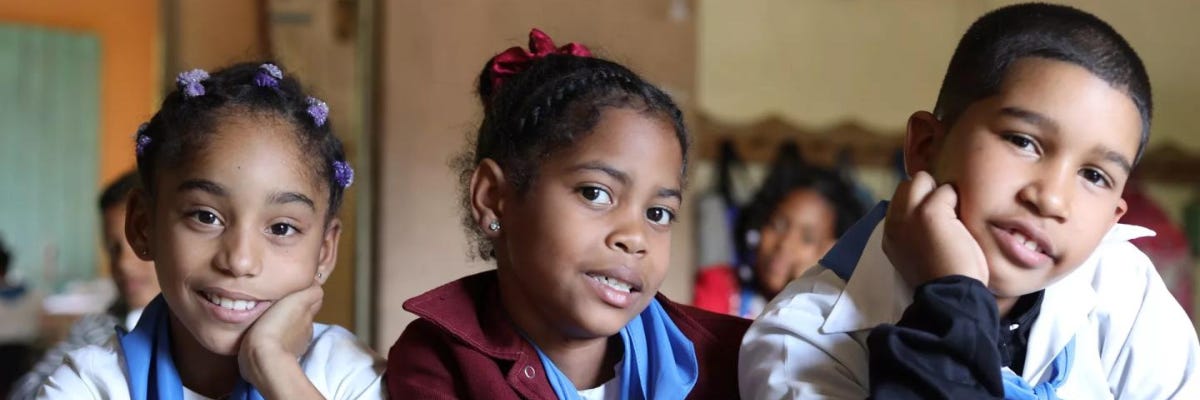
The Cuban public health system has maintained notably high standards of care despite the long embargo. One of the areas where this is most clear is Cuba’s vaccination rates. Cuba’s childhood immunization schedule includes eleven vaccines, eight out of which are produced domestically. For these standard vaccines, the country regularly reached vaccination rates exceeding 98% of the population. But the ongoing fuel blockade is putting Cuba’s public health achievements at risk.
To understand how sanctions can negatively impact access to vaccines, it is necessary to trace effects across the entire vaccine “life cycle.” Sanctions can interfere with processes including financing, selection, research and development, production, procurement, distribution, and monitoring. This kind of life cycle analysis, a methodological approach used in public health studies, reveals what is otherwise masked by high immunization rates. U.S. sanctions have forced Cuba to adapt its health system to fiscal constraints, and isolation from global supply chains. But the domestic vaccine industry may be approaching a breaking point.
Uncomfortable Trade-Offs
Funding a national vaccine immunization program requires significant budgetary resources. When sanctions hit Cuban economic output, it limits the fiscal space of the Cuban government, making even basic public health services more difficult to afford. The primary feature of the U.S. sanctions on Cuba is a near-total ban on bilateral trade. Researchers estimate that a 1% decrease in economic exchange between Cuba and the US produces a 0.76% drop in GDP over the following three years – a compounding drag on public budgets. Remittances from the U.S., responsible for 6.8% of Cuba’s GDP between 2005 and 2020, are explicitly targeted by U.S. sanctions, alongside dollar-denominated trade with third countries.
U.S. sanctions have forced Cuba to adapt its health system to fiscal constraints and isolation from global supply chains. But the domestic vaccine industry may be approaching a breaking point.
Cuba is also largely cut off from foreign investment and loans. U.S. sanctions effectively bar Cuba from accessing international financial institutions like the IMF, and expose foreign firms to litigation in U.S. courts. While sanctions are not the sole cause of budget restraints within Cuba’s health care system, they reduce the government’s fiscal space and force uncomfortable trade-offs.
These trade-offs include decisions about which vaccines Cuba picks for its national immunization program. While standard criteria such as medical necessity and cost-effectiveness remain central, fiscal constraints push Cuba to make selection decisions earlier – before costly R&D – unlike in many other health systems. Some products cannot be considered at all, either because they are expensive or legally restricted due to U.S. content thresholds. Yet even when importation might be possible, Cuba frequently prioritizes domestic production to avoid entire immunization programs hinging on favorable foreign policy decisions in the U.S.
Take Cuba’s COVID-19 response as an example. After six decades of sanctions, the government anticipated it would not be prioritized through COVAX, the international effort to expand access to the COVID-19 vaccine, and might lack the financial means to import vaccines. Cuba instead pursued domestic development, selecting candidates based on safety, efficacy, and similarity to established vaccine platforms to accelerate timelines. Funding came from reallocation away from ongoing products, and grants from international stakeholders like the Central American Bank for Economic Integration and European solidarity organisations.
The successful development of five COVID-19 vaccines demonstrates that U.S. sanctions had not fully eroded Cuba’s capacity to finance immunization campaigns. Yet the emergency reallocation came at a cost. Cervical cancer, often resulting from a sexually transmitted HPV infection, is one of the leading causes of female mortality in Cuba. But the HPV vaccine program was repeatedly de-prioritized as public health officials responded to pandemic using limited budget resources.
The Cost of Circumvention
Many of the materials essential for vaccine research, development, and production are difficult for Cuba to access due to sanctions. U.S. legislation prohibits exports to Cuba if a product contains over 10% American-made parts or ingredients, or is traded by U.S. companies or their subsidiaries. With the United States being not only a close neighbor but also a dominant actor in global pharmaceutical and technological trade, this creates significant barriers. When the Swedish firm Pharmacia, a longstanding supplier of medical equipment and chemicals to Cuba, merged with American company Upjohn, all sales to Cuba were immediately prohibited. As U.S. companies continue to acquire foreign pharmaceutical firms, the number of Cuba’s potential trading partners keeps shrinking.
Overcoming the limitations posed by U.S. sanctions causes delays, higher costs, and lower quality products. Cuba cannot produce cultivation mediums for vaccines, such as calf serum or bovine albumin itself. Shipments from suppliers in Europe or New Zealand take 18 to 24 days, compared to under 24 hours from the U.S. Switching to alternative suppliers also raises costs. When pharmaceutical companies Sartorius, Merck, and Cytiva ceased their sales to Cuba during the first year of the pandemic, prices for alternative inputs rose by 50% to 65%.
Even when transactions are covered by humanitarian exemptions, as is technically the case for the sale of vaccines or related materials and equipment, many international companies disengage anyway. Existing exemptions are frequently tied to unrealistic conditions: the Torricelli Act permits medical exports but requires the U.S. President to verify that all goods benefit only the Cuban people, while a separate exemption to the 180-day port rule requires an entire cargo ship to carry exclusively humanitarian goods, which is rarely economically viable.
Moreover, Cuba’s designation as a State Sponsor of Terrorism thwarts most remaining willingness to engage. When Japanese manufacturer JASCO refused to sell laboratory equipment to Cuba solely because of its State Sponsor of Terrorism designation, it illustrated the pattern of over-compliance among global manufacturers. Thus, humanitarian exemptions have repeatedly failed to protect the development and production of vaccines.
Isolated and Dependent
Vaccine delivery is inherently international engagement: research is conducted across borders, supply chains span continents, and multilateral institutions coordinate delivery. At the most basic level, Cuban scientists face obstacles in accessing and contributing to international academic journals. Taylor & Francis and the American Psychiatric Association ceased their operations in Cuba citing sanctions. Attending international conferences and collaborating with counterparts in the United States is fully off the table since President Trump revoked the Obama administration’s general license for scientific travel.
On the other hand, isolation makes Cuba more dependent on global health initiatives to procure vaccines that it cannot produce domestically. Cuba has relied on UNICEF as its procurement intermediary since 1992, circumventing restricted banking channels and trade barriers to maintain a steady supply. Last year, Cuba also began procuring HPV vaccines through the PAHO Revolving Fund, which pools regional demand to reduce costs. Both mechanisms lower costs and bypass restricted financial channels – but they also deepen Cuba’s dependence on multilateral bodies that rely significantly on U.S. funding, directly undermining Cuba’s ambition for sovereignty in the face of sanctions pressure.
Access Under Pressure
Looking at the life cycle of vaccines in Cuba reveals that more than six decades of U.S. sanctions have not led to the collapse of the country’s health system. Yet sanctions affect the process behind vaccine access, constraining vaccine financing, procurement, and international collaboration. Under the cover of high immunization rates, sanctions have reshaped Cuba’s health system.
The pressure on Cuba’s oil imports is likely to exacerbate these effects and increase the precarity of vaccine access in Cuba. Without access to oil, domestic economic activity will diminish, and tourism, long a driver of growth, will likely come to a standstil. These developments will deepen an economic crisis three decades in the making, reducing the budget available for public health, and forcing increasingly difficult trade-offs between emergency response and preventive care. Fuel shortages will also create further barriers to procurement as planes are unable to refuel in Cuba. Moreover, many vaccines need to be refrigerated, and cold-chain distribution is energy-intensive. Meanwhile, the multilateral organizations that have often stepped in to shield ordinary Cubans from the effects of sanctions are themselves being weakened by reductions in U.S. funding.
The Trump Administration should recognize that eroding Cuba’s vaccine access is not without consequences for the region. Cuba has eliminated diseases like measles through stringent vaccination. If vaccine access were to plummet and measles to break out again, travelers and migrants may carry the disease to shores already under pressure: The United States is currently facing its worst measles outbreak since the 1990s. At a minimum, the US should adjust its sanctions policy to shield the Cuban vaccine sector from its most damaging effects. However, given the sector’s reliance on public budgets, trade, and international collaboration, this isolation seems unrealistic. Instead, the US should facilitate imports of essential vaccines through multilateral channels like UNICEF and the PAHO Revolving Fund. Exemptions that exist on paper but fail in practice are not sufficient.
Josefine Petrick is a Policy Fellow at the Bourse & Bazaar Foundation, where she researches the intersection of sanctions policies and global public health. She is also the coordinator of the Bologna Initiative for Sanctions Relief.
Section: (all-articles) Photo: Unicef